Video creators
You have a still image, a short concept, or a visual treatment and need motion.
The fal ai video generator route helps you compare image-to-video and text-to-video starting points.
fal ai video generatorCapability guide
What can fal ai do? It gives you a single place to explore generative models for images, video, audio, and other media workflows, then choose a route that matches the job.
Use the capability view to move from an outcome to a suitable model route instead of browsing every option at once.
You have a still image, a short concept, or a visual treatment and need motion.
The fal ai video generator route helps you compare image-to-video and text-to-video starting points.
fal ai video generatorYou want to compare image, video, audio, and 3D options before choosing an implementation path.
The fal models guide gives you a clearer view of the model families available for different jobs.
fal modelsYou need quick concept variations for a campaign, interface, product scene, or visual pitch.
Start with the intended output, then narrow the prompt around style, subject, framing, and format.
fal modelsYou are testing whether a generative task belongs in an image, video, audio, or multimodal workflow.
Use the capability split to define the task first, then inspect the matching model route and inputs.
fal ai video generatorThis route is most useful when you need a fast decision between capability areas, not a deep tour of one model.
Describe whether you need an image, moving clip, audio result, 3D asset, or another media output. The desired result determines the useful starting branch.
Include the subject, style, duration or framing needs, source files, and any details that must remain consistent from one result to the next.
Review the matching model or workflow, then hand the prompt and task context to Fal for the next step.
The general entry point is broad; this capability route is organized around what you are trying to make.
Capability route
General entry point
Capability route
What kind of output do I need?
General entry point
Which model or tool should I browse?
Capability route
Outcome, medium, and task
General entry point
Model name, catalog, or documentation
Capability route
Early exploration and task routing
General entry point
Focused model selection and implementation
Capability route
Find an image-oriented path from the desired result
General entry point
Open a specific image model or workflow
Capability route
Separate text-to-video from image-to-video needs
General entry point
Browse video models directly
Capability route
Start broad, then add constraints
General entry point
Often begins with model-specific input requirements
Capability route
Reduces the number of irrelevant choices
General entry point
Gives deeper control after a model is known
Capability route
Turn the task into a model-ready prompt
General entry point
Inspect, test, or integrate a selected model
A capability overview can point you in the right direction, but it cannot remove the normal tradeoffs of generative media.
Outputs can vary with the prompt, source material, model, and generation settings.
WorkaroundIterate with one change at a time and keep the strongest prompt structure.
Different routes may have different input formats, controls, output behavior, or suitability for a particular subject.
WorkaroundConfirm the selected model's requirements before building a repeatable workflow.
A broad request such as “make it better” does not define the subject, style, motion, or audience well enough for reliable results.
WorkaroundState the output, subject, visual direction, and constraints in concrete terms.
Some projects still need editing, compositing, moderation, asset preparation, or human review after generation.
WorkaroundTreat the route as the generation stage inside a larger production workflow.
The useful shift is not just a new image or clip; it is a clearer path from an open-ended request to a chosen generation route.
Define the medium before refining style.

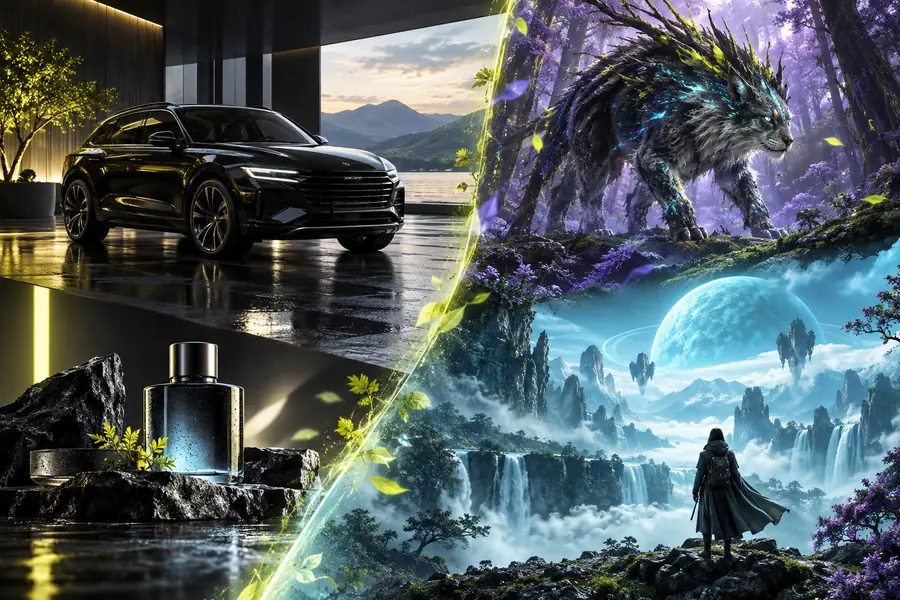
Bring a concrete output in mind, describe the subject and constraints, and use Fal as the handoff point for exploring the right generative path.
Explore Fal capabilitiesAnswers to the core capability question, without treating every model or workflow as interchangeable.
Fal AI can help you work with generative media tasks such as image creation, video generation, audio-related workflows, and other model-driven outputs. The practical starting point is to describe the result you want, then select a route and model that fit the task.
Yes, the platform can support image and video generation through different model routes. Your best starting point depends on whether you are creating from text, transforming an existing image, or refining an ongoing media workflow.
It can make model discovery more focused by connecting your intended output with a relevant capability area. You still need to review the selected model's inputs, controls, and output behavior before relying on it for a production workflow.
Yes. Creators can use it to explore outputs and workflows, while developers can use the same capability breakdown to decide which type of model or generation path belongs in an application.